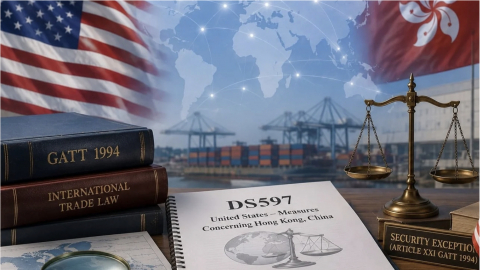
Abstract: Dispute DS597 between Hong Kong, China and the United States at the World Trade Organization (WTO) concerning the origin marking requirement for goods from Hong Kong raises important questions regarding the scope of the security exception under Article XXI of the General Agreement on Tariffs and Trade. Based on an analysis of the panel report in DS597 and in comparison with earlier jurisprudence, this article clarifies the approach of the Panel in interpreting the concept of “emergency in international relations,” a key condition for invoking the security exception. The article also draws several implications for Vietnam in the context of the increasing use of trade measures justified on national security grounds.
Keywords: Article XXI, GATT 1994, security exception, international relations, WTO.
1. Introduction
Against the backdrop of escalating geopolitical tensions, particularly among major economies, the use of unilateral trade measures under the guise of protecting national security has become increasingly common. The invocation of security grounds by members of the World Trade Organization (WTO) to justify trade-restrictive measures poses significant challenges to the order and stability of the multilateral trading system. In this context, Article XXI of the General Agreement on Tariffs and Trade 1994 (GATT 1994), which provides for the security exception, has become the focal point of numerous WTO disputes in recent years.
A central legal issue arising in disputes concerning the security exception is whether WTO members are entitled to determine for themselves the existence of an “emergency in international relations”, thereby invoking the security exception under Article XXI of the GATT 1994, or whether such a situation must be determined objectively. If an objective determination is required, what criteria has the WTO established for identifying such an emergency? Although this issue has gradually been clarified through WTO dispute settlement practice, significant differences remain among WTO members and scholars regarding its interpretation.
Recognizing that the determination of an “emergency in international relations” is an important legal issue in international trade law that warrants further introduction and in-depth study in Viet Nam, this article seeks to clarify both the theoretical and practical aspects surrounding this issue. Given that the concept has been developed primarily through dispute settlement practice, the author selects a representative case study to examine how WTO dispute settlement bodies have applied the concept of an “emergency in international relations” within the framework of Article XXI(b)(iii) of the GATT 1994.
As of early April 2026, United States – Origin Marking Requirement (DS597) between Hong Kong, China and the United States is the most recent dispute concerning the security exception that has completed the panel stage.[1] In this dispute, the United States invoked Article XXI(b)(iii) of the GATT 1994 to justify the origin-marking requirement challenged by Hong Kong, China.[2] In addition to contributing to the development and refinement of the criteria for determining an “emergency in international relations”, the context of this dispute also carries important implications for Viet Nam. Accordingly, this article selects the dispute as a representative case study for analysis. The article focuses on clarifying the legal standards for determining an “emergency in international relations”, as illustrated through DS597. On that basis, the article draws several specific lessons for Viet Nam in assessing, responding to, and formulating trade policies related to national security.
2. The security exception under the GATT 1994 from historical and theoretical perspectives
The security exception first appeared in the GATT 1947 and was provided for under Article XXI.[3] The GATT 1947 recognized that, in certain exceptional circumstances, contracting parties were entitled to adopt and implement measures to protect their essential security interests without being bound by their trade commitments.
With the establishment of the WTO, this exception was retained in Article XXI of the GATT 1994 and has become one of the most controversial exception provisions within the legal framework of the multilateral trading system.[4] The continued existence of the security exception reflects the right of WTO members not to comply with their multilateral trade commitments in exceptional circumstances where the protection of national security takes precedence over concerns relating to free trade.[5]
In terms of substance, the security exception under the GATT 1994 remains unchanged from that under the GATT 1947. However, the context and enforcement mechanism of this provision within the WTO differ significantly. The GATT 1947 did not possess a formal dispute settlement mechanism or policy review process to oversee the application of this exception. By contrast, the GATT 1994 is supported by the highly developed WTO dispute settlement mechanism, enabling issues relating to the security exception to be addressed more effectively.
Beyond trade in goods, which was governed by the GATT 1947, the security exception within the WTO framework also extends to trade in services and intellectual property, thereby enabling members to protect security interests in sectors such as finance, telecommunications, and other service industries.[6] As the scope of this article is limited to a dispute concerning trade in goods, the author does not discuss other WTO agreements. Nevertheless, the provisions governing the security exception in other WTO agreements are broadly similar in substance. Accordingly, an examination of Article XXI of the GATT 1994 may facilitate an understanding of the security exception provisions contained in other WTO agreements.
Structurally, Article XXI of the GATT 1994 consists of three principal paragraphs corresponding to three important aspects of security in international trade. First, paragraph (a) of Article XXI permits a member to refuse to furnish any information where disclosure would be contrary to its essential security interests. This provision, on the one hand, recognizes the importance of information confidentiality to national security and, on the other hand, preserves members’ autonomy in deciding whether information should be disclosed for reasons of national security.
Second, paragraph (b) of Article XXI permits members to take measures necessary for the protection of national security in three specific circumstances set out in subparagraphs (i) to (iii). These circumstances include measures relating to fissionable materials and the materials from which they are derived, as well as arms, ammunition, and implements of war. Notably, subparagraph (iii) allows the invocation of the exception during a “war” or an “emergency in international relations”. Paragraph (b) of Article XXI thus establishes the legal basis for WTO members to regulate the export, import, and circulation of strategic products, such as nuclear materials and military technologies, on national security grounds. In particular, during wartime or an emergency situation, this provision enables members to adopt timely measures to safeguard national security.
Finally, paragraph (c) of Article XXI provides that the Agreement shall not prevent a contracting party from taking any action in pursuance of its obligations under the Charter of the United Nations for the maintenance of international peace and security. In other words, where a member adopts measures pursuant to requirements imposed by the United Nations to preserve international peace and security, such measures shall not be regarded as inconsistent with its obligations under the GATT 1994.
From a comparative perspective, Article XXI and Article XX of the GATT 1994 (General Exceptions) differ significantly in both scope and application.[7] While Article XX permits members, where necessary, to depart from their obligations under the GATT 1994 in order to pursue non-economic objectives such as public morals, human health and life, and the conservation of natural resources, Article XXI is concerned exclusively with national security. With respect to its application, Article XX requires members to demonstrate a genuine connection between the measure adopted and the objective pursued. This stringent mechanism helps prevent the arbitrary invocation of Article XX but also renders the application of the exception more difficult in practice.[8]
By contrast, Article XXI essentially grants members a self-judging right in determining the appropriate measures for the protection of their essential security interests. To understand this approach, it is necessary to recognize that the security exception is a legal mechanism designed to balance two sets of fundamental requirements within the multilateral trading system. On the one hand, it acknowledges the sovereign right of members to protect national security. On the other hand, it remains subject to the broader obligation to comply with international trade commitments under the principle of pacta sunt servanda. If Article XXI were interpreted as conferring unlimited discretion upon members, it could easily become a convenient justification for trade protectionist measures. Such an interpretation would directly undermine the transparency, predictability, and stability of the WTO legal order.[9]
The considerable discretion afforded by Article XXI in determining the necessity of measures for the protection of essential security interests also gives rise to the question that this article seeks to address. Specifically, does this self-judging authority extend so far as to allow members to determine for themselves the existence of the conditions necessary to invoke the exception, most notably the existence of an “emergency in international relations”? As will be demonstrated through the analysis of DS597 between the United States and Hong Kong, China in the following sections, this issue remains highly controversial among WTO members.
For more than seven decades following the adoption of the GATT 1947, GATT/WTO members generally exercised considerable restraint in invoking the security exception to justify trade-restrictive measures, owing to concerns that excessive reliance on the exception could weaken the multilateral trading system.[10] However, a turning point emerged after the 2008 global financial crisis and the rise of economic nationalism. The dispute between Russia and Ukraine concerning traffic in transit (DS512) in 2016 marked the beginning of a new trend in the invocation of this exception within the WTO.[11] Since then, the security exception has been invoked with increasing frequency by WTO members and risks becoming a “shield” used to justify trade protectionist measures.[12]
3. Theoretical issues concerning the determination of an "emergency in international relations" when invoking the security exception under Article XXI of the GATT 1994
3.1. General overview of an "emergency in international relations"
Within the structure of Article XXI of the GATT 1994, an “emergency in international relations” may be understood as a condition triggering the application of the security exception. It serves to identify circumstances in which a trade-related issue is no longer assessed under the ordinary approach of trade liberalization but is instead considered within the exceptional context of an emergency in international relations.
Unlike certain concepts that are relatively clearly defined in WTO agreements, an “emergency in international relations” is not formally defined in either the GATT 1994 or any interpretative instrument. The provision merely refers to “war” and an “emergency in international relations” without delineating the boundary between these two situations or specifying the criteria for identifying an “emergency”. Consequently, the substantive meaning of this concept has been developed primarily through jurisprudence. This reflects a characteristic feature of the WTO legal system, in which the interpretative function of dispute settlement bodies plays an important role in the development and clarification of WTO rules. However, significant reliance on jurisprudence in the interpretative process may also give rise to inconsistencies in understanding and application among members.
In dispute settlement proceedings, the determination of the existence of an “emergency in international relations” is generally undertaken only after the dispute settlement body has concluded that the trade measure at issue is inconsistent with one or more WTO provisions. This serves as the basis for assessing whether the respondent member satisfies the requirements for invoking the security exception under Article XXI(b)(iii). If this condition is not met, the invocation of the security exception will not be accepted, and the dispute settlement body need not proceed to examine the remaining requirements under Article XXI. This issue will be analysed in greater detail in the following sections of the article.
3.2. Self-judging authority in determining an emergency in international relations
A central issue in the interpretation of Article XXI(b) of the GATT 1994 concerns the self-judging nature of the provision, reflected in the phrase “which it considers necessary”. Through a series of disputes from DS512 to DS597, the boundary between a member’s self-judging authority and the WTO’s supervisory role based on objective legal standards has gradually been clarified by distinguishing two separate categories of elements within the legal structure of this provision.
On the one hand, the phrase “which it considers necessary” in the chapeau of Article XXI(b) indicates that WTO members have the authority to assess for themselves what constitutes their essential security interests.[13] The phrase also allows members to determine the necessity of the measures adopted to protect those interests.[14] Although the assessment of necessity under Article XXI(b) is not subject to the stringent necessity test applicable to the general exceptions under Article XX of the GATT 1994, this self-judging authority is not absolute. Measures adopted pursuant to Article XXI(b) must nevertheless comply with the principle of good faith.[15] In assessing good faith, WTO dispute settlement bodies generally examine two factors: whether the identification of the essential security interests was made in good faith and whether the measures adopted to protect those interests are plausibly related to the protection of those interests.[16]
On the other hand, the phrase “which it considers necessary” does not extend to the circumstances specified in subparagraphs (i), (ii), and (iii) of Article XXI(b). More specifically, whether a measure relates to “fissionable materials”, “traffic in arms”, or is taken “in time of war or other emergency in international relations” is not a self-judging matter but rather one that must be assessed objectively.[17] WTO dispute settlement bodies have repeatedly emphasized that Article XXI(b) cannot be regarded as entirely self-judging. According to the Panel in DS512, the self-judging element of the provision does not extend so far as to permit a member unilaterally to determine the existence of the conditions required for invoking the security exception.[18]
Accordingly, while the WTO recognizes a degree of self-judging authority for members when invoking the security exception, it nevertheless retains the authority to conduct an objective assessment of the conditions for invoking that exception.[19] In the author's view, this distinction is appropriate because, if members were allowed to determine these conditions entirely at their own discretion, the legal limitations embedded in Article XXI(b)(iii) would be rendered largely meaningless.
The position of the United States on this issue differs significantly from the WTO’s approach. In several disputes, the United States argued that Article XXI(b) is self-judging and therefore does not require a member to demonstrate the existence of an emergency in international relations.[20] In other words, the United States maintained that determining the existence of an “emergency in international relations” falls within a member’s discretion, just as determining the necessity of measures adopted to protect national security. However, in DS544, the United States appeared to adopt a position closer to that of the WTO. It argued that, even if Article XXI(b) were not considered entirely self-judging by the Panel, the United States’ tariff measures remained consistent with WTO rules because they had been adopted during an emergency in international relations.[21] This argument suggests that, while the United States has not completely abandoned its view regarding the self-judging nature of Article XXI(b), it has acknowledged that the existence of an “emergency in international relations” may be assessed on the basis of objective factors rather than depending exclusively on the unilateral assertion of the member invoking the exception.
In summary, Article XXI(b)(iii) of the GATT 1994 treats an “emergency in international relations” as a fundamental condition triggering the application of the security exception. This condition is objective in nature and serves to limit the scope of the security exception, thereby preventing its arbitrary invocation. Although WTO members retain the authority to assess their essential security interests and the necessity of the measures adopted to protect them, such authority may only be exercised where a genuine emergency in international relations exists. In the author's view, this approach strikes an appropriate balance between preserving the policy space necessary for states to respond to serious security threats and reducing the risk that the security exception may be abused to justify protectionist trade measures.
3.3. Criteria for determining an "emergency in international relations"
As noted above, an “emergency in international relations” is a concept that is not defined in WTO instruments. This has resulted in divergent interpretations and applications of the concept among WTO members.[22] In this context, dispute settlement practice has played an important role in filling this legal gap by gradually developing and clarifying the criteria for identifying such an emergency. Beginning with Russia – Measures Concerning Traffic in Transit (DS512),[23] the reasoning and analysis relating to this issue were further reinforced and developed in subsequent disputes, including Saudi Arabia – Measures Concerning the Protection of Intellectual Property Rights (DS567)[24] and the group of disputes concerning United States – Certain Measures on Steel and Aluminium Products (most notably DS544).[25] Based on the interpretation and application of Article XXI(b)(iii) by WTO dispute settlement bodies, this article identifies several basic criteria for determining and clarifying the meaning of an “emergency in international relations” under Article XXI(b)(iii) of the GATT 1994.
First, an “emergency in international relations” must arise in relations between subjects of international law. Such a situation is generally characterized by a significant deterioration in the level of cooperation or an escalation of tensions and confrontation in diplomatic, economic, and security relations. Accordingly, the existence of such an emergency cannot be assessed solely on the basis of domestic effects within a particular sector or field but must instead be evaluated within the broader context of the bilateral or multilateral relations between the parties concerned.
Second, the concept reflects a state of severe tension in relations between states. It is commonly associated with war, armed conflict, profound diplomatic crises, or large-scale sanctions, rather than ordinary policy disagreements. Accordingly, concerns that are purely commercial in nature or relate only to domestic production capacity are insufficient to constitute an “emergency in international relations” under Article XXI(b)(iii). Likewise, internal economic fluctuations are generally not regarded as evidence of a breakdown in international relations capable of triggering the security exception.
In the author's view, the WTO’s approach to the security exception in general, and to the determination of an “emergency in international relations” under Article XXI(b)(iii) in particular, reflects a cautious effort to maintain a balance between the sovereign right of members to protect their security interests and the need to preserve the predictability of the multilateral trading system. Nevertheless, this boundary remains inherently dynamic and depends significantly on the specific political and economic circumstances of each dispute. This raises an important question: whether maintaining a degree of controlled flexibility is sufficient to prevent the long-term abuse of the security exception. Against a backdrop of increasingly intense geopolitical conflicts, this issue is likely to remain a subject of considerable debate within the WTO legal system.
4. Practice of determining an "emergency in international relations" in DS597 between the United States and Hong Kong, China concerning origin marking requirements
4.1. Background of DS597 between the United States and Hong Kong, China concerning origin marking requirements
DS597 originated from Executive Order 13936, issued on 14 July 2020.[26] The United States took the position that, following the enactment of the Law of the People's Republic of China on Safeguarding National Security in the Hong Kong Special Administrative Region on 30 June 2020, Hong Kong no longer maintained a sufficient degree of autonomy to continue receiving treatment distinct from mainland China in trade and economic matters. On that basis, the United States Customs and Border Protection issued a requirement that goods produced in Hong Kong be marked as originating in “China” rather than “Hong Kong”.[27]
On 30 October 2020, Hong Kong, China initiated WTO dispute settlement proceedings. According to Hong Kong, China, the United States measure was inconsistent with the GATT 1994, the Agreement on Rules of Origin, and the Agreement on Technical Barriers to Trade. The United States rejected these allegations and invoked the security exception under Article XXI(b)(iii) of the GATT 1994 to justify the challenged measure. According to the United States, the situation in Hong Kong following the enactment of the national security legislation by China constituted an “emergency in international relations”.
At the request of Hong Kong, China, a Panel was established on 22 February 2021 and circulated its report on 21 December 2022. On 26 January 2023, the United States appealed to the Appellate Body at a time when that body remained unable to function due to the prolonged impasse affecting the WTO dispute settlement system, with the result that the dispute has yet to be definitively resolved.[28]
DS597 represents the first instance in which a WTO member invoked the security exception to justify a technical measure relating to the origin marking of goods. The dispute required the WTO dispute settlement body to address several important legal questions concerning the meaning of an “emergency in international relations”, the limits of members’ self-judging authority, and the objective criteria for determining the existence of such a situation.
4.2. Interpretation of the concept of an "emergency in international relations" in DS597
4.2.1. Self-judging authority in determining an "emergency in international relations"
The central legal issue in DS597 was whether the United States could invoke the security exception under Article XXI(b)(iii) of the GATT 1994 to justify its origin marking requirement. As in previous disputes, the United States maintained in DS597 that Article XXI(b) is entirely self-judging. According to the United States, the phrase “which it considers necessary” applies not only to the chapeau of Article XXI(b) but also to subparagraphs (i)–(iii).[29] Under this interpretation, only the member concerned has the authority to determine whether a measure is necessary and whether a particular situation constitutes an “emergency in international relations”. By contrast, Hong Kong, China argued that Article XXI(b) is only partially self-judging. According to Hong Kong, China, the phrase “which it considers” does not extend to the subparagraphs. This position was also supported by several third parties participating in the dispute.[30] Accordingly, the determination of an “emergency in international relations” is objective in nature and falls within the authority of the Panel to assess.
In examining this issue, the Panel applied the rules of treaty interpretation under the Vienna Convention on the Law of Treaties 1969 and concluded that Article XXI(b) is not entirely self-judging.[31] The phrase “which it considers” merely allows a member to determine which measures are necessary for the protection of its national security, whereas the existence of the circumstances specified in subparagraphs (i), (ii), and (iii), including an “emergency in international relations”, remains subject to the Panel’s objective assessment.[32]
Accordingly, the approach to self-judging authority adopted in DS597 is consistent with the position established in earlier disputes. The distinction between the self-judging elements (essential security interests and the necessity of the measures adopted) and the objectively reviewable elements (the existence of an “emergency in international relations”) demonstrates the WTO’s effort to develop a controlled model of the security exception. From a theoretical perspective, this model helps reconcile two potentially competing objectives: preserving a certain degree of policy space for members in matters of national security while preventing the security exception from becoming a mechanism for circumventing the core trade commitments embodied in the GATT 1994. From a practical perspective, the affirmation of the dispute settlement body's authority to conduct an objective assessment of the existence of an emergency in international relations signifies the maintenance of a degree of legal oversight by the WTO over the invocation of Article XXI(b). This contributes to strengthening the institutional role of the WTO and enhancing the effectiveness of the multilateral trading system's legal framework.
4.2.2. The threshold for determining an "emergency in international relations"
According to the United States, an “emergency in international relations” is a dangerous situation or conflict arising in the political or economic relations between States, typically emerging unexpectedly and requiring an urgent response. In addition, the United States argued that Article XXI(b)(iii) does not employ limiting terms such as “similar to” war; therefore, the scope of an “emergency” is not confined to situations of a military nature.[33]
By contrast, Hong Kong, China advocated a narrow interpretation of the concept of an “emergency in international relations,” limiting it to situations such as armed conflict or the risk thereof, high levels of international tension, or serious crises affecting international relations. Hong Kong, China also emphasized that events occurring in another country, which are not directly related to the security, defence, or public order interests of the invoking Member, would be unlikely to constitute an “emergency in international relations.”[34] Third-party participants in the dispute generally also supported the interpretation established in DS512.[35]
The positions of the United States and Hong Kong, China reflect a common divergence among Members regarding the scope of and criteria for assessing an “emergency in international relations.” Some Members favour a broad interpretation and emphasize the self-judging authority of the invoking State. Others support a narrower interpretation while underscoring the role of the dispute settlement body in objectively determining the existence of such a situation. This divergence stems not only from differing legal approaches but also from the non-uniform economic and political interests of Members. It consequently poses a significant challenge for the WTO in maintaining a balance between preserving Members’ policy space in matters of security and preventing the abuse of the security exception within the multilateral trading system.
In DS597, after affirming its authority to objectively review the existence of the conditions for invoking the security exception under Article XXI(b), the Panel proceeded to interpret the phrase “emergency in international relations” in accordance with the Vienna Convention 1969 on the Law of Treaties.[36] The purpose of this interpretation was to establish a “legal threshold” for determining when a situation may be regarded as an “emergency in international relations.” The application of the treaty interpretation principles embodied in the Vienna Convention 1969 demonstrates a cautious approach grounded in objective legal standards rather than the subjective assessments of Members or of the dispute settlement body itself.
First, the Panel examined the ordinary meaning of the constituent terms in the English text.[37] Accordingly, “emergency” was understood as an unexpected and serious situation requiring immediate action, while “international relations” refers to relations among States and international actors across various fields. The Panel also considered the equally authentic French (“grave tension internationale”) and Spanish (“tensión internacional”) versions. Both versions use the notion of “serious international tension” rather than “emergency.” The term grave denotes a high degree of seriousness capable of resulting in significant adverse consequences, whereas tension/tensión implies a state of strain, confrontation, or potential conflict.
On that basis, the Panel adopted a harmonized interpretation of the three language versions. According to this interpretation, the concept of an “emergency in international relations” does not encompass every ordinary tension or disagreement in international relations. Rather, it refers to a situation of exceptional gravity, reflecting a breakdown or imminent breakdown in relations between States or other subjects of international law.[38]
To further clarify the meaning of this concept, the Panel proceeded to examine the context of the provision.[39] In this regard, the use of the conjunction “or” in Article XXI(b)(iii) between “war” and “other emergency in international relations” indicates that war serves as a paradigmatic example, thereby implying that other “emergencies” must possess a comparable degree of seriousness and have a significant impact on international relations. The Panel also observed that an emergency need not arise directly from the invoking Member itself but may originate from conflicts involving other States.
Moreover, when considered in conjunction with subparagraphs (i) and (ii) of Article XXI(b), as well as Article XXI(c), the Panel concluded that the provision is directed toward exceptionally serious situations in international relations, often associated with security and defence contexts, although not limited thereto. Accordingly, and taking into account the objectives of the GATT 1994 and the Marrakesh Agreement Establishing the World Trade Organization, an “emergency in international relations” is understood as a situation reflecting a breakdown or a serious risk of breakdown in relations between States.
This approach reflects the Panel’s effort to apply consistently the interpretative methodology of the Vienna Convention 1969, following a framework that begins with the ordinary meaning of the terms and is supplemented by an examination of the context of the provision. Through a well-reasoned analysis, the Panel in this dispute further refined the legal criteria for determining the existence of an “emergency in international relations” when invoking the security exception under Article XXI(b)(iii).[40] Accordingly, such a situation is not constituted by ordinary tensions but must involve circumstances of exceptional gravity that impair or threaten to substantially impair international relations. By placing the threshold of an “emergency in international relations” at the point of a breakdown or imminent breakdown in relations between States, the Panel significantly narrowed the scope of Article XXI(b)(iii) compared with the broader interpretation proposed by the United States. This approach may be understood as an institutional response to the trend of “securitizing” trade disputes following the 2008 financial crisis, aimed at ensuring that the security exception retains its exceptional character rather than becoming a general safe harbour for all forms of political or economic tension.
However, associating an “emergency in international relations” with circumstances closely linked to war and traditional security crises also raises the question of whether the current framework is sufficiently flexible to encompass non-traditional security risks, such as cybersecurity and supply chain security. These risks may have serious implications for the security interests of States but do not necessarily involve a rupture of diplomatic relations or a substantial decline in international cooperation. This therefore highlights the challenge of balancing the need to preserve the exceptional nature of Article XXI(b)(iii) with the need for the concept to adapt to an increasingly diversified security environment.
4.3. Determining the existence of an "emergency in international relations" in DS597
After clarifying the meaning of the concept of an “emergency in international relations,” the next step in the assessment process is to determine whether the circumstances relating to Hong Kong satisfy the threshold of an “emergency in international relations” discussed above.[41]
With respect to the parties’ arguments, the United States contended that developments in Hong Kong had given rise to serious concerns regarding national security and the international order, thereby justifying measures adopted in response to an emergency situation. In contrast, Hong Kong, China argued that there was no sufficiently clear connection between these developments and the defence or public order interests of the United States. It further maintained that bilateral relations, particularly in the field of trade, had essentially remained intact. Several third parties also expressed differing views regarding the extent to which the situation in Hong Kong affected international security.
Following the Panel’s approach, it may be observed that developments in Hong Kong gave rise to certain concerns in international relations. However, such concerns did not reach the threshold of an “emergency” under Article XXI(b)(iii), as they did not demonstrate a breakdown or an imminent risk of breakdown in relations between the parties, given that trade and cooperative activities essentially continued to be maintained.
To reinforce this conclusion, the Panel compared the circumstances with previous disputes concerning the security exception. Notably, DS512 and DS567 both involved serious conflicts, including armed conflicts, broad economic sanctions, and disruptions in diplomatic and consular relations. Comparable factors were absent in the present case, where economic relations between the parties, as reflected in their tariff policies, were fundamentally maintained.
On the basis of the foregoing analysis, the Panel concluded that no “emergency in international relations” existed within the meaning of Article XXI(b)(iii) of the GATT 1994. Consequently, the United States’ origin marking requirement could not be justified under the relevant security exception.[42]
It can be seen that, in applying the threshold of an “emergency in international relations” to the specific circumstances of DS597, the Panel placed particular emphasis on indicators associated with international relations, such as armed conflict, the severance of diplomatic relations, or large-scale economic sanctions, rather than concerns relating to values or political systems. In the author's view, this approach implies that disagreements concerning institutional arrangements or public policies, insofar as they have not resulted in a breakdown or an imminent risk of breakdown in relations, are unlikely to qualify as an “emergency in international relations” under Article XXI(b)(iii).
In terms of its implications, DS597 not only rejected the United States’ invocation of the security exception in a particular dispute but also delivered an important message for disputes arising in contexts different from those of DS512 and DS567. Specifically, attempts to extend the security exception beyond armed conflicts, military confrontations, and traditional security crises to situations involving lower levels of geopolitical tension are likely to face a stringent legal threshold within the WTO framework.
4.4. Observations on the determination of an "emergency in international relations" in DS597
The ruling in DS597 reaffirmed that the existence of an “emergency in international relations” is a prerequisite for invoking the security exception under Article XXI(b)(iii) of the GATT 1994. If the invoking party fails to establish the existence of an “emergency in international relations,” reliance on Article XXI(b)(iii) will be rejected. Through this dispute, the analytical framework applicable to this provision has become more clearly defined and increasingly resembles the two-tier test applied to the general exceptions under Article XX, whereby the objective condition of an “emergency in international relations” functions as a threshold requirement before any consideration is given to the necessity of the challenged measure.
A notable aspect of the Panel’s reasoning is that, having reached this conclusion, it ceased its analysis and did not proceed to examine the remaining conditions under Article XXI(b). According to the Panel, once the requirement of an “emergency in international relations” was not satisfied, further examination of the other conditions became legally unnecessary pursuant to the principle of judicial economy.[43] This indicates that an “emergency in international relations” functions not only as a substantive prerequisite but also as a procedural filtering mechanism. If this threshold is not met, the dispute settlement body may apply judicial economy and refrain from assessing the remaining elements of the security exception provision, such as whether the challenged measure was necessary. From the perspective of the allocation of the burden of proof, the approach adopted in DS597 implies that the party invoking Article XXI(b)(iii) bears the responsibility of presenting sufficient and persuasive evidence establishing the existence of an “emergency in international relations.” Failure to satisfy this threshold will result in the rejection of the security exception defence without the need for further arguments from the complainant.
In determining the existence of an “emergency in international relations” in DS597, the Panel focused on the objectively ascertainable degree of seriousness in relations between States rather than on the subjective assessment of the invoking party. This approach carries important implications for the legal framework governing the security exception within the WTO. First, DS597 reinforces the view that the security exception is not entirely self-judging. While WTO Members retain the right to define and protect their essential security interests, invocation of the exception must still satisfy objectively verifiable conditions. Second, the WTO dispute settlement body possesses the authority to conduct legal review and determine whether the conditions underlying the invocation of the security exception have been fulfilled. This approach limits the risk of the security exception being used for purposes beyond the protection of national security and contributes to preserving the role of the multilateral trading system.
DS597 demonstrates that, for an “emergency in international relations” to exist, relations between States must have reached the point of breakdown or imminent breakdown. The decision of the WTO dispute settlement body in DS597 to establish such a high threshold was not merely the product of the particular facts of the dispute but reflects a deliberate institutional design choice within the WTO framework. If this threshold were lowered so that any form of political or economic tension could be regarded as an “emergency,” the security exception under Article XXI(b)(iii) could easily be abused as a general justification for trade protectionist measures, thereby significantly undermining the predictability and binding nature of commitments under the GATT 1994. Conversely, by recognizing only genuinely exceptional circumstances - typically associated with war, armed conflict, severe diplomatic crises, or large-scale economic sanctions - the WTO system seeks to preserve the exceptional nature of Article XXI while still allowing Members a certain degree of flexibility to protect their essential security interests when international relations enter a state of extreme abnormality.
From the perspective of jurisprudential development, DS597 makes two important contributions to the interpretation of the security exception.
First, unlike earlier disputes such as DS512 and DS567, the existence of an “emergency” in those cases was largely self-evident because the factual circumstances involved armed conflict, military operations, large-scale economic sanctions, or the severance of diplomatic relations. In such situations, the central question before the dispute settlement body primarily concerned the relationship between the challenged measure and the crisis situation, rather than whether the situation itself satisfied the emergency threshold. By contrast, DS597 represents the first case in which a Panel was required to assess Article XXI(b)(iii) in circumstances involving no war, no use of force, no severance of diplomatic relations, and no broad economic sanctions between the parties, while a Member nevertheless invoked the security exception to justify a trade measure. The necessity of determining whether political tensions unaccompanied by armed conflict could qualify as an “emergency in international relations” makes DS597 a significant test case concerning the scope of Article XXI(b)(iii).
Second, by comparing the circumstances of this dispute with earlier cases involving armed conflict, military confrontation, and economic sanctions, and by assessing the factual context of DS597 against the criteria developed in DS512 and DS567, the Panel not only concluded that developments in Hong Kong and the policy responses of the United States failed to satisfy the emergency threshold but also implicitly mapped out a spectrum of levels of tension in international relations. At one end of the spectrum are policy and value-based disagreements that frequently arise between States, where trade and diplomatic cooperation essentially continue. At the other end are armed conflicts, large-scale economic sanctions, or the severance of diplomatic relations, as in DS512 and DS567, where the risk of a breakdown in relations is particularly acute. DS597 was situated by the Panel somewhere in the middle of this spectrum: political and security tensions had increased substantially, attracted significant international attention, and prompted certain responsive measures, yet diplomatic and trade relations between the parties continued, without signs of a comprehensive deterioration. In this sense, the unique contribution of DS597 lies in clarifying the boundary between the middle range of tensions - where the security exception is unavailable - and the threshold of exceptionally grave circumstances to which Article XXI(b)(iii) is genuinely directed. In doing so, it further narrows the scope for invoking the security exception in response to ordinary forms of political and economic tension.
The foregoing analysis reveals a relatively clear distinction between ordinary political and economic tensions and the state of “breakdown or imminent breakdown” in international relations as understood within the WTO framework. The former category encompasses disagreements, including intense disputes over institutional arrangements or economic policies, in which the core channels of trade and diplomatic cooperation between the States concerned continue to function, even if they are partially restricted or temporarily disrupted. The latter category corresponds to situations in which the deterioration of cooperation has exceeded ordinary levels and is manifested through factors such as the outbreak of armed conflict, the severance or substantial downgrading of diplomatic relations, the imposition of large-scale economic sanctions, or even comprehensive boycotts, placing relations between the parties at risk of collapse. Only situations falling within the latter category approach the threshold of an “emergency in international relations” contemplated by Article XXI(b)(iii), whereas the vast majority of political and economic tensions in international relations remain insufficient to trigger the security exception.
The Panel also observed that the further a situation departs from paradigmatic circumstances such as war or threats to international peace and security, the greater the evidentiary burden on the invoking party to demonstrate that the situation has reached the threshold of breakdown or imminent breakdown in international relations. From a litigation perspective, this observation implies that the further a situation lies from the “core zone” of war and conflicts threatening international peace and security, the higher the standard of proof required to establish both the existence of an “emergency in international relations” and the causal relationship between that situation and the challenged measure.
DS597 also sheds light on the Panel’s attitude toward prior decisions of the WTO dispute settlement system. In interpreting the concept of an “emergency in international relations,” the Panel referred extensively to the analysis in DS512, particularly regarding the criteria for identifying such an emergency. However, the Panel emphasized that the present dispute arose in a different factual context and that the parties’ arguments also differed from those in the earlier case.[44] Thus, rather than merely replicating the approach adopted in the previous dispute, the Panel in DS597 applied that approach flexibly to the specific circumstances before it, thereby contributing to the further development of the interpretation of Article XXI within the WTO framework. This approach reflects a characteristic feature of the WTO dispute settlement system, under which prior decisions do not constitute binding precedent, although they are frequently relied upon - with appropriate adaptations - to promote consistency and predictability in the interpretation of WTO agreements.
5. Implications drawn from DS597: Legal implications and lessons for Vietnam
5.1. Legal implications of the determination of an "emergency in international relations" in DS597 for Vietnam
The clarification of the meaning and criteria for determining an “emergency in international relations” in DS597 not only narrows the scope for invoking the security exception under Article XXI(b)(iii) of the GATT 1994 but also generates a number of specific legal implications for Vietnam, ranging from dispute-risk assessment to the formulation of responsive measures. From a legal perspective, the Panel’s approach in DS597 demonstrates that Article XXI(b)(iii) of the GATT 1994 operates in practice as a narrowly construed exception, requiring Members to establish the existence of an “emergency in international relations” that extends beyond ordinary economic and trade concerns.
Against the backdrop of current geopolitical instability, both the possibility that Vietnam may be affected by trade-restrictive measures imposed by its trading partners and the possibility that Vietnam itself may adopt measures on security grounds necessitate a clear understanding of the legal boundaries established in DS597. This requirement is relevant not only to the design and refinement of the domestic legal framework but also directly affects the manner in which Vietnam develops legal arguments when participating in the WTO dispute settlement system.
First, DS597 illustrates the growing tendency to “securitize” issues that are traditionally commercial in nature, such as rules of origin, anti-circumvention measures, supply chain controls, and technology regulation. In this dispute, even a technical measure concerning origin marking was justified on national security grounds. This suggests that issues relating to transshipment and Vietnam’s role in global supply chains may be elevated by trading partners into matters of national security, thereby serving as grounds for the adoption of trade-restrictive measures. Disputes arising from this trend are likely to involve issues of origin, transshipment, and particularly products regarded as “sensitive,” such as steel, electronic equipment, or high-technology goods. Trading partners may invoke supply chain security concerns to justify the imposition of additional tariffs, stricter technical requirements, or enhanced origin controls on exports from Vietnam.
Second, Vietnam itself may need to adopt trade-restrictive measures in order to safeguard national security. Should disputes arise from such measures, they may be reviewed by the WTO dispute settlement body under the provisions governing the security exception. Disputes of this nature may emerge where Vietnam is compelled to restrict the export of certain strategic resources or to control the importation of goods affecting defence and security interests.
It should be emphasized that the current legal framework already grants the State significant authority to adopt trade-restrictive measures on grounds of security or public interest. The Law on Foreign Trade Management 2017 permits the application of administrative measures such as export prohibitions and import prohibitions (Articles 8–9), temporary suspension of exports and imports (Articles 11–12), and export restrictions, import restrictions, export quotas, and import quotas (Articles 15–17) with respect to certain categories of goods for reasons of national defence, security, public health protection, environmental protection, or the implementation of international treaties to which Vietnam is a party. The Law on National Security 2004 (amended in 2023) provides for fundamental measures to safeguard national security, including legal, economic, scientific and technological, operational, and armed measures, and authorizes the application of necessary measures where threats to national security arise but do not yet warrant the declaration of a state of emergency (Articles 15 and 21). The Law further empowers specialized national security agencies to employ operational measures, require agencies, organizations, and individuals to provide information, documents, and objects, and adopt other necessary measures to address activities infringing upon national security (Article 24). The Law on Cybersecurity 2025 also authorizes competent authorities to adopt a range of necessary technical and administrative measures in situations involving serious threats to national security, social order, and public safety (see Chapter II, Articles 11–28 of the Law on Cybersecurity 2025).
However, trading partners may argue that Vietnam’s reliance on security considerations is insufficiently justified. It may be observed that these statutes employ broad concepts such as “national security,” “national interests,” and “State interests,” without establishing a clear legal distinction between ordinary economic and political tensions and the state of “breakdown or imminent breakdown” in international relations clarified by the Panel in DS597. One implication of DS597 is that Vietnam should carefully assess whether the degree of tension in international relations and the relevant factual circumstances have approached the threshold of an “emergency in international relations” before invoking the security exception. If this distinction is not adequately recognized and reflected in the design and implementation of domestic law, Vietnam may encounter difficulties in justifying such measures under the security exception in accordance with the standards applied by the WTO.
Third, geopolitical conflicts among major powers may result in trade and investment restrictions imposed on security grounds, thereby indirectly affecting Vietnam. This concern is particularly significant where Vietnam is perceived as a “weak link” in measures aimed at controlling trade with a third country, creating the risk that Vietnamese goods or services may themselves become subject to restrictions on security grounds. This risk is likely to increase as Vietnam becomes more deeply integrated into global supply chains. In practice, Vietnam has frequently faced concerns from major trading partners, particularly the United States, regarding unlawful transshipment and the relabelling of goods originating from China.[45] In this context, a thorough understanding of the strict criteria and objective requirements associated with an “emergency in international relations” under DS597 would enable Vietnam to argue that the factual circumstances do not satisfy the conditions necessary to trigger the security exception under Article XXI(b)(iii) of the GATT 1994, particularly where bilateral relations between Vietnam and the State adopting the measure continue to be maintained.
5.2. Lessons for Vietnam
The legal standards established in DS597 for determining the existence of an “emergency in international relations” not only impose limits on the invocation of the security exception but also provide Vietnam with a set of proactive legal tools. Specifically, the stringent legal threshold, the objective nature of the “emergency in international relations” requirement, and the two-tier test adopted by the Panel in DS597 collectively offer guidance on how Vietnam may challenge the “securitization” of trade measures by its trading partners, design and defend its own security-related measures, and narrow the gap between domestic law and WTO legal standards.
Corresponding to the three categories of circumstances discussed in Section 5.1, the following recommendations focus on: (i) using DS597 to challenge trade-restrictive measures adopted by trading partners; (ii) designing and invoking the security exception when necessary; and (iii) strengthening institutional capacity to reduce the risk of being affected by the “securitization” of trade arising from geopolitical conflicts among major powers.
5.2.1. Utilizing the high threshold of an "emergency in international relations" to challenge disguised protectionist measures
DS597 confirms that an “emergency in international relations” arises only where relations between States reach an exceptionally serious level, approaching a state of breakdown or imminent breakdown, and does not encompass ordinary forms of political or economic tension.
This high-threshold standard provides Vietnam with a legal basis for challenging unilateral trade restrictions justified by trading partners through reliance on the security exception. Where normal diplomatic and trade relations continue to exist between the parties, Vietnam may argue that the triggering condition under Article XXI(b)(iii) has not been satisfied and that the trading partner therefore cannot rely on the security exception to conceal disguised protectionist measures. Such arguments are particularly useful in disputes involving rules of origin, transshipment, or supply chain controls - areas in which Vietnam’s major trading partners may be inclined to “securitize” trade concerns - because they shift the focus of the dispute away from the “sensitivity” of a particular sector and toward the central legal question of whether relations between the parties have genuinely reached the threshold of an “emergency” under the standards established in DS597.
From a policy perspective, Vietnam should establish mechanisms for regularly monitoring and assessing the policies of major trading partners in sensitive sectors. Where trading partners elevate supply chain concerns into matters of national security, Vietnam should rely on this “high-threshold” standard to argue that, so long as trade and diplomatic interactions continue under normal conditions, the security exception cannot legitimately be invoked to impose barriers such as origin-marking requirements or additional tariffs. In terms of implementation, consideration may be given to assigning an inter-agency focal point - such as a trade remedies task force or an inter-ministerial working group - the responsibility of monitoring and consolidating information on security-related measures adopted by trading partners, thereby enabling the timely deployment of arguments based on the high-threshold standard established in DS597 during consultations and dispute settlement proceedings.
5.2.2. Leveraging the requirements of objective review to limit absolute self-judging authority
The ruling in DS597 further confirms that the determination of an “emergency in international relations” is objective in nature and subject to review by the WTO dispute settlement body rather than being entirely within the discretion of the invoking party. This means that Vietnam is not required to accept unilateral assertions of “national security” as self-evident facts but may instead request that the Panel undertake an independent assessment based on evidence. Requiring the dispute settlement body to independently examine the existence of an “emergency in international relations” enables Vietnam to avoid being drawn into a purely political debate and helps ensure that disputes remain governed by objective legal standards.
To effectively apply this lesson, Vietnam should strengthen its capacity in international economic law, particularly through the study of WTO jurisprudence, in order to critically assess the arguments advanced by trading partners and require invoking parties to satisfy their burden of proof under the objective standards established by WTO case law. In the short term, this objective could be pursued through the development of an internal “jurisprudence handbook” on the security exception and the organization of specialized training programmes for legal officers and trade negotiators, thereby ensuring that all relevant Vietnamese authorities share a common understanding and a consistent legal vocabulary when engaging with trading partners or participating in WTO disputes.
5.2.3. Using the two-tier test as a model for designing and defending domestic policies
DS597 has clarified a two-tier test for the security exception: first, the invoking party must establish the existence of an “emergency in international relations” as an objective condition; second, consideration may then be given to the protection of “essential security interests” and the appropriateness or necessity of the measure adopted.
On this basis, Vietnam may use this framework as a model when designing trade measures linked to national security, particularly in situations involving restrictions on the export of strategic resources or controls on the importation of goods, technologies, or equipment serving defence and security purposes, as discussed in Section 5.1. Specifically, before adopting such measures, competent authorities should conduct an objective assessment of the relevant circumstances, clearly identify the security interests to be protected, and maintain a comprehensive evidentiary record, including documentation of less trade-restrictive alternatives that were considered but ultimately rejected. Proactively strengthening the evidentiary basis of such measures will enhance both their credibility and their defensibility should a dispute arise.
Another important lesson derived from DS597 is the need to clearly incorporate the concept of an “emergency in international relations” into domestic law and to establish an objective assessment process before invoking the security exception. This would help ensure that, whenever Vietnam needs to rely on the security exception, the relevant measure is supported by a sufficiently robust legal and evidentiary foundation capable of satisfying the stringent standards applied by the WTO dispute settlement body. At the same time, incorporating the two-tier structure into the drafting and amendment of legal instruments concerning trade restrictions adopted on security grounds would help narrow the gap between domestic law and the objective legal standards developed through WTO jurisprudence.
5.2.4. Utilizing judicial economy to optimize litigation strategy
In DS597, after concluding that the requirement of an “emergency in international relations” had not been met, the Panel terminated its analysis and did not proceed to examine the remaining elements of Article XXI(b)(iii), relying on the principle of judicial economy. This approach demonstrates that the emergency requirement functions not only as a substantive criterion but also as a procedural filter within the dispute settlement process.
For Vietnam, this suggests a clear strategic direction: in disputes involving the security exception, resources should be concentrated on demonstrating that the factual circumstances have not reached the emergency threshold established in DS597. If the dispute settlement body is persuaded at this stage, Vietnam may secure a favourable outcome without having to engage in more sensitive debates concerning essential security interests. This strategy is particularly appropriate given Vietnam’s relatively limited litigation resources, as it permits a focused effort on a limited number of objective criteria at an early stage rather than requiring the simultaneous pursuit of multiple complex arguments concerning the security exception, which would demand substantially greater evidentiary and human resources.
5.2.5. Promoting supply chain transparency to mitigate the trend of trade "securitization"
DS597 demonstrates that international relations may be viewed as a continuum, within which most policy disagreements remain at the level of ordinary tensions and do not reach the threshold of an “emergency in international relations.”
For Vietnam, this standard serves not only as a basis for legal argumentation but also highlights the importance of transparency in trade governance, particularly given the risk that Vietnam may be perceived as a “weak link” in measures directed at third countries, as discussed in Section 5.1. Strengthening origin controls, combating unlawful transshipment, and enhancing transparency in supply chain-related policies would contribute to demonstrating that the concerns raised by trading partners are essentially ordinary commercial concerns rather than matters of security. Conversely, the absence of reliable data and transparent supply chain governance mechanisms would make it more difficult for Vietnam to argue that a dispute concerns ordinary trade risks, thereby creating opportunities for trading partners to characterize the issue as a security matter and seek to invoke Article XXI(b)(iii).
In practical terms, supply chain transparency may be enhanced through the modernization of origin certification systems, closer coordination between customs authorities and sectoral ministries, and the encouragement of businesses to adopt internationally recognized traceability standards in order to reduce suspicions relating to supply chain security. Such an approach would not only strengthen Vietnam’s position in potential disputes but also help distinguish ordinary commercial concerns from the narrowly defined concept of an “emergency in international relations” established in DS597.
Accordingly, DS597 provides a number of practical lessons for Vietnam in refining its legal framework and litigation strategy if it seeks both to safeguard its legitimate security interests and to minimize the risk of becoming subject to disguised protectionist measures adopted under the banner of “national security.”
6. Conclusion
The DS597 dispute is not merely a case concerning origin marking requirements; it also represents an important milestone in reaffirming the role of the rule of law within the multilateral trading system amid the growing tendency to adopt “securitized” measures in international trade. The Panel established a high threshold for the application of Article XXI(b)(iii), holding that an “emergency in international relations” exists only where relations between States have reached a state of breakdown or imminent breakdown. This approach demonstrates that WTO Members cannot arbitrarily expand the scope of the security exception to justify non-compliance with their trade obligations solely on the basis of policy differences or concerns relating to values.
For Vietnam, the DS597 dispute highlights the need for a cautious approach to the increasing tendency to securitize trade-restrictive measures. In a context where international trade is increasingly affected by geopolitical developments, a thorough understanding of the legal reasoning concerning the security exception - including the applicable analytical framework and the burden of proof borne by the invoking party - is of significant importance for the protection of national interests. At the same time, reliance on objective legal standards established through WTO dispute settlement practice will help limit the politicization of legal arguments and strengthen the stability and predictability of the multilateral trading system.
In conclusion, a comprehensive understanding of the legal reasoning developed in DS597 and its appropriate application in practice will not only enable Vietnam to effectively safeguard its trade interests but also ensure consistency between domestic policies and obligations arising under the WTO framework.
REFERENCES
A. Books, Journal Articles, and Reports
1. James Bacchus, The Black Hole of National Security Striking the Right Balance for the National Security Exception in International Trade, Policy Anal. (2022).
2. Peter L.H. van den Bossche & Sarah Akpofure, Chapter 3: The Use and Abuse of the National Security Exception under Article XXI(b)(Iii) of the GATT 1994, in A New Global Economic Order: New Challenges to International Trade Law (Chia-Jui Cheng ed., 2019).
3. Roger P. Alford, The Self-Judging WTO Security Exception, Utah Law Rev.(2011)
4. Daniel Rangel, WTO General Exceptions: Trade Law’s Faulty Ivory Tower (2022), https://www.citizen.org/article/wto-general-exceptions-trade-laws-faulty-ivory-tower/.
5. Stephan Schil & Robyn Briese, “If the State Considers”: Self-Judging Clauses in International Dispute Settlement, 13 Max Planck Yearb. U. N. Law (2009).
6. Panel, Russia - Measures Concerning Traffic in Transit - Report of the Panel (2019),https://docs.wto.org/dol2fe/Pages/FE_Search/FE_S_S009-DP.aspx?language=E&CatalogueIdList=252975,252976&CurrentCatalogueIdIndex=0&FullTextHash=&HasEnglishRecord=True&HasFrenchRecord=True&HasSpanishRecord=True.
7. Panel, United States - Origin Marking Requirement - Report of the Panel (2022), https://docs.wto.org/dol2fe/Pages/SS/directdoc.aspx?filename=q:/WT/DS/597R.pdf&Open=True
8. Panel, US - Origin Marking (Hong Kong, China), World Trade Organization (Feb. 17, 2023), https://www.wto.org/english/tratop_e/dispu_e/cases_e/ds597_e.htm
9. Erich Vranes, WTO Security Exceptions in Practice and Scholarship: Curtailing “Trump Cards” through Proportionality (2023).
10. Ministry of Agriculture, Forestry and Fisheries, Geographical Indication (GI) Protection System in Japan (2022), https://www.maff.go.jp/e/policies/intel/gi_act/attach/pdf/index-1.pdf.
11. The President’s Executive Order on Hong Kong Normalization, Office of the Press Secretary (July 14, 2020), https://trumpwhitehouse.archives.gov/presidential-actions/presidents-executive-order-hong-kong-normalization/.
12. Vu Nguyen Hanh, US Transshipment Scrutiny: Origin Compliance for Vietnam-Based Firms, Vietnam Briefing News, Oct. 15, 2025, https://www.vietnam-briefing.com/news/transshipment-origin-risks-vietnam-based-businesses-stay-compliant-2025.html/.
13. WTO - Trade in Goods (Rüdiger Wolfrum, Peter-Tobias Stoll, & Holger Hestermeyer eds., 2011).
14. Panel, United States - Certain Measures on Steel and Aluminium - Report of the Panel (2022), https://docs.wto.org/dol2fe/Pages/SS/directdoc.aspx?filename=q:/WT/DS/544R.pdf&Open=True.
15. WTO, Analytical Index – GATT 1994: Security Exceptions (2012), https://www.wto.org/english/res_e/booksp_e/gatt_ai_e/art21_e.pdf.
B. Cases and Jurisprudence
16. Russia - Measures Concerning Traffic in Transit, WTO Doc. WT/DS512/R, Dispute Settlement Body, 2019
17. Saudi Arabia - Measures Concerning the Protection of Intellectual Property Rights (DS567),WTO Doc. WT/DS567/R, Dispute Settlement Body, 2020.
18. United States - Origin Marking Requirement (DS597), WTO Doc. WT/DS597/R, Dispute Settlement Body, 2022
19. United States - Certain Measures on Steel and Aluminium Products (DS544), WTO Doc. WT/DS544/R, Dispute Settlement Body, 2022
20. United States - Certain Measures on Steel and Aluminium Products (DS548), WTO Doc. WT/DS548/R, Dispute Settlement Body, 2022
21. United States - Certain Measures on Steel and Aluminium Products (DS550), WTO Doc. WT/DS550/R, Dispute Settlement Body, 202222. United States - Certain Measures on Steel and Aluminium Products (DS551), WTO Doc. WT/DS551/R, Dispute Settlement Body, 2022
23. United States - Certain Measures on Steel and Aluminium Products (DS552), WTO Doc. WT/DS552/R, Dispute Settlement Body, 2022
24. United States - Certain Measures on Steel and Aluminium Products (DS554), WTO Doc. WT/DS554/R, Dispute Settlement Body, 202225. United States - Certain Measures on Steel and Aluminium Products (DS556), WTO Doc. WT/DS556/R, Dispute Settlement Body, 202226. United States - Certain Measures on Steel and Aluminium Products (DS564), WTO Doc. WT/DS564/R, Dispute Settlement Body, 2022.
C. Domestic Legislation
27. Law on Cybersecurity 2025 (Law No. 116/2025/QH15).
28. Law on National Security 2004 (Law No. 32/2004/QH11, amended in 2023).
29. Law on Foreign Trade Management 2017 (Law No. 05/2017/QH14).
30. Executive Order 13936, 85 Fed. Reg. 43413 (July 14 2020)
D. International Treaties
31. General Agreement on Tariffs and Trade 1947 (GATT 1947).
32. General Agreement on Trade in Services (GATS).
33. Agreement on Trade-Related Aspects of Intellectual Property Rights (TRIPS Agreement).
34. General Agreement on Tariffs and Trade 1994 (GATT 1994).
E. Other materials
35. Communication from Hong Kong, China, United States - Origin Marking Requirement, WTO Doc. WT/DS597/10 (Feb. 2, 2023), https://docs.wto.org/dol2fe/Pages/SS/directdoc.aspx?filename=q:/WT/DS/597-10.pdf&Open=True
[*] PhD, Lecturer, Faculty of Law, School of Economics, Law and Government, University of Economics Ho Chi Minh City (UEH). Email: duydk@ueh.edu.vn. Accepted for publication on 29 May 2026.
[1] United States - Origin Marking Requirement (DS597), WTO Doc. WT/DS597/R, Dispute Settlement Body, 2022; see also Panel, United States – Origin Marking Requirement - Report of the Panel (2022), https://docs.wto.org/dol2fe/Pages/SS/directdoc.aspx?filename=q:/WT/DS/597R.pdf&Open=True.
[2] See the summary of the dispute at WTO, US - Origin Marking (Hong Kong, China), World Trade Organization (Feb. 17, 2023), https://www.wto.org/english/tratop_e/dispu_e/cases_e/ds597_e.htm.
[3] See Article XXI of the General Agreement on Tariffs and Trade 1947 (GATT 1947).
[4] Peter L.H. van den Bossche & Sarah Akpofure, Chapter 3: The Use and Abuse of the National Security Exception under Article XXI(b)(Iii) of the GATT 1994, in A New Global Economic Order: New Challenges to International Trade Law, 123 (Chia-Jui Cheng ed., 2019).
[5] WTO - Trade in Goods 571 (Rüdiger Wolfrum, Peter-Tobias Stoll, & Holger Hestermeyer eds., 2011).
[6] See Article XIVbis of the General Agreement on Trade in Services (GATS), or Article 73 of the Agreement on Trade-Related Aspects of Intellectual Property Rights (TRIPS Agreement).
[7] See Article XX of the General Agreement on Tariffs and Trade 1994 (GATT 1994).
[8] Daniel Rangel, WTO General Exceptions: Trade Law’s Faulty Ivory Tower (2022), https://www.citizen.org/article/wto-general-exceptions-trade-laws-faulty-ivory-tower/.
[9] Roger P. Alford, The Self-Judging WTO Security Exception, Utah Law Rev., 698 (2011).
[10] James Bacchus, The Black Hole of National Security Striking the Right Balance for the National Security Exception in International Trade, Policy Anal., 4 (2022).
[11] Russia – Measures Concerning Traffic in Transit (DS512), WTO Doc. WT/DS512/R, Dispute Settlement Body, 2019; see also Panel, Russia - Measures Concerning Traffic in Transit - Report of the Panel (2019), https://docs.wto.org/dol2fe/Pages/FE_Search/FE_S_S009-DP.aspx?language=E&CatalogueIdList=252975,252976&CurrentCatalogueIdIndex=0&FullTextHash=&HasEnglishRecord=True&HasFrenchRecord=True&HasSpanishRecord=True.
[12] WTO - Trade in Goods, supra note 5 at 121.
[13] Stephan Schil & Robyn Briese, “If the State Considers”: Self-Judging Clauses in International Dispute Settlement, 13 Max Planck Yearb. U. N. Law, 66–9 (2009).
[14] Panel, supra note 13 at 7.146, 7.147.
[15] Id. at 107–9.
[16] Id. at para 7.132-7.135, 7.138, 7.139.
[17] Id. at 98–9, 105–6.
[18] Id. at para 7.132-7.135, 7.138, 7.139.
[19] WTO, Analytical Index - GATT 1994: Security Exceptions, 603 (2012), https://www.wto.org/english/res_e/booksp_e/gatt_ai_e/art21_e.pdf.
[20] Ministry of Agriculture, Forestry and Fisheries, Geographical Indication (GI) Protection System in Japan (2022), https://www.maff.go.jp/e/policies/intel/gi_act/attach/pdf/index-1.pdf.
[21] Panel, United States - Certain Measures on Steel and Aluminium - Report of the Panel para 7.134 (2022), https://docs.wto.org/dol2fe/Pages/SS/directdoc.aspx?filename=q:/WT/DS/544R.pdf&Open=True.
[22] WTO - Trade in Goods, supra note 5 at 587–8.
[23] Panel, supra note 13.
[24] Saudi Arabia - Measures Concerning the Protection of Intellectual Property Rights (DS567),WTO Doc. WT/DS567/R, Dispute Settlement Body, 2020.
[25] United States - Certain Measures on Steel and Aluminium Products (DS544) , WTO Doc. WT/DS544/R, Dispute Settlement Body, 2022; Xem thêm United States - Certain Measures on Steel and Aluminium Products (DS548), WTO Doc. WT/DS548/R, Dispute Settlement Body, 2022; United States - Certain Measures on Steel and Aluminium Products (DS550), WTO Doc. WT/DS550/R, Dispute Settlement Body, 2022; United States - Certain Measures on Steel and Aluminium Products (DS551), WTO Doc. WT/DS551/R, Dispute Settlement Body, 2022; United States - Certain Measures on Steel and Aluminium Products (DS552), WTO Doc. WT/DS552/R, Dispute Settlement Body, 2022; United States - Certain Measures on Steel and Aluminium Products (DS554), WTO Doc. WT/DS554/R, Dispute Settlement Body, 2022; United States - Certain Measures on Steel and Aluminium Products (DS556), WTO Doc. WT/DS556/R, Dispute Settlement Body, 2022; United States – Certain Measures on Steel and Aluminium Products (DS564), WTO Doc. WT/DS564/R, Dispute Settlement Body, 2022.
[26] The President’s Executive Order on Hong Kong Normalization, Office of the Press Secretary (July 14, 2020), https://trumpwhitehouse.archives.gov/presidential-actions/presidents-executive-order-hong-kong-normalization/.
[27] Executive Order 13936, 85 Fed. Reg. 43413 (July 14 2020).
[28] Xem Communication from Hong Kong, China, United States – Origin Marking Requirement, WTO Doc. WT/DS597/10 (Feb. 2, 2023), https://docs.wto.org/dol2fe/Pages/SS/directdoc.aspx?filename=q:/WT/DS/597-10.pdf&Open=True
[29] Panel, supra note 1 at 25–6, para 7.29, 7.36-7.38.
[30] Id. at 25, 27, para 7.30, 7.39-41.
[31] Panel, supra note 1 at 9–36, para 7.50, 7.57, 7.66, 7.78, 7.81, 7.86, 7.88, 7.89.
[32] Id. at 49, 57, para 7.160, 7.185.
[33] Id. at 76, para 7.270-272.
[34] Id. at 76–77, para 7.273-275.
[35] Id. at 77, para 7.276.
[36] Id. at 77, para 7.277.
[37] Id. at 77–80, para 7.5.4.1.2.1.
[38] Id. at 80, para 7.290.
[39] Id. at 80–83, para 7.5.4.1.2.2.
[40] Id. at 83–85, para 7.5.4.1.2.3.
[41] Id. at 85–92, para 7.5.4.2.2.1.
[42] Id. at 94, para 7.360.
[43] Id. at 94, para 7.360-7.361.
[44] Id. at 77, n.398.
[45] Vu Nguyen Hanh, US Transshipment Scrutiny: Origin Compliance for Vietnam-Based Firms, Vietnam Briefing News, Oct. 15, 2025, https://www.vietnam-briefing.com/news/transshipment-origin-risks-vietnam-based-businesses-stay-compliant-2025.html/.