Raising the tax threshold for household businesses: Timely removal of difficulties, strengthening management from the root
Ninh Gia
Thursday, Jun/25/2026 - 12:14
Listen to Audio
0:00
(L&D) - The proposal to raise the tax threshold to VND 1 billion per year clearly reflects the requirement to provide support to the right target groups, ensure fairness, and prevent revenue loss.
Easing the burden on household businesses to preserve resources for the economy
At the group discussion session within the framework of the First Session of the 16th National Assembly on the draft law amending and supplementing several provisions of tax laws, Prime Minister Le Minh Hung proposed that National Assembly deputies support the policy of raising the tax threshold applicable to household and individual business entities. Under the proposed option, the revenue threshold is expected to be increased to VND 1 billion per year; below this level, household businesses will not be subject to value-added tax and personal income tax.
This is a noteworthy policy signal, as it reflects not only a technical adjustment in taxation but also a clear expression of governance that is closely aligned with practical realities and responsive to emerging pressures in the economy. In the context of fluctuating fuel prices, a complex regional environment, rising input costs, and the erosion of resilience in the small business sector, raising the tax threshold is a necessary step to ease pressure, maintain production momentum, stabilize livelihoods, and create room for reinvestment for millions of household businesses.
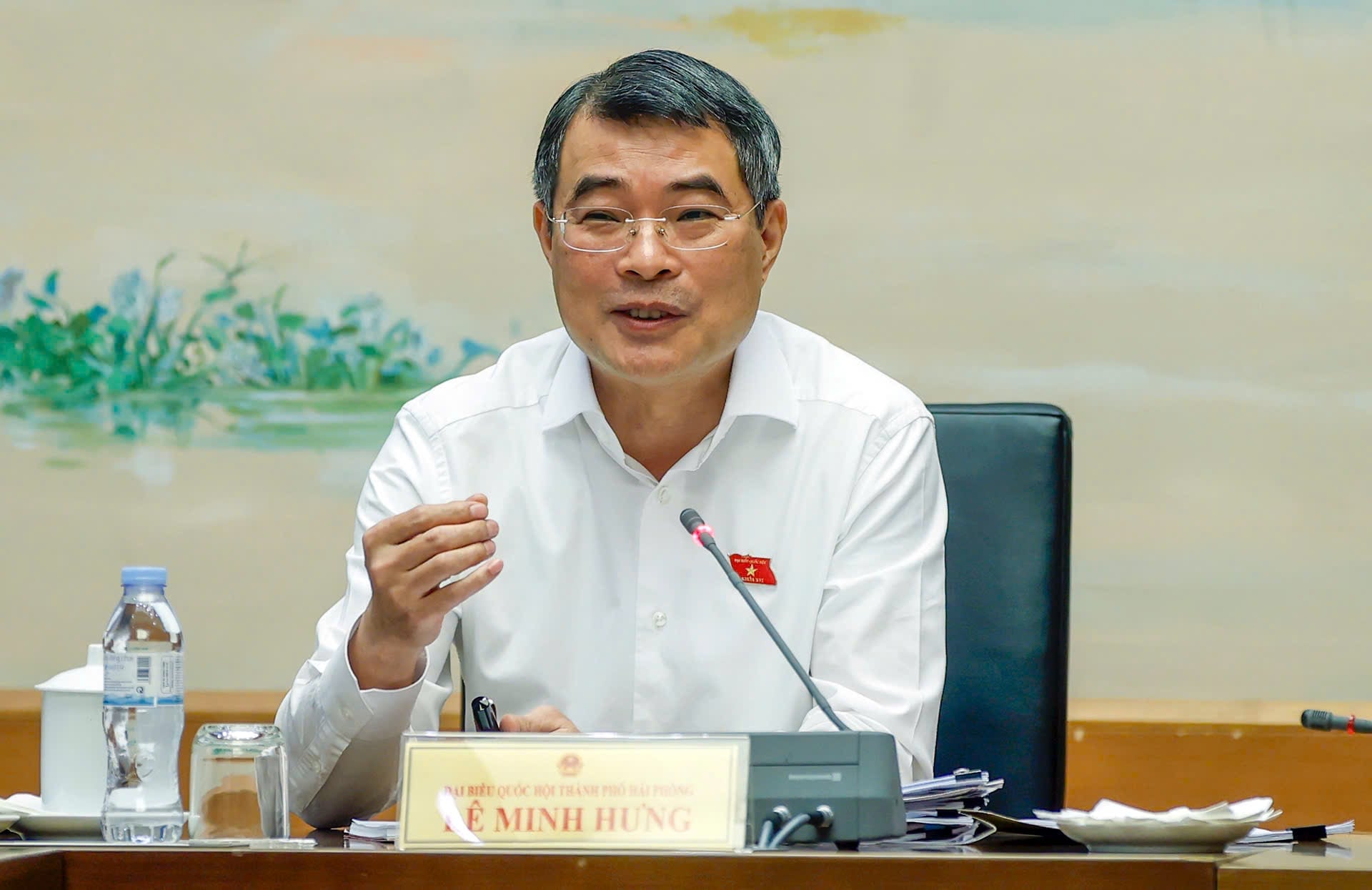
The Prime Minister believes that policy measures implemented in an urgent and timely manner will be highly useful and effective for household businesses and individual business entities - Photo: VGP/Nhat Bac
In his remarks at the group discussion, the Prime Minister emphasized that the Government “fully agrees that it is necessary to study and adjust the wording in the draft in the direction that the tax threshold must certainly be raised.”
This is a statement with a clear policy orientation: tax policy cannot stand outside of reality, nor can it move more slowly than the pace of economic life. When difficulties are already present, policy responses must be sufficiently fast, sufficiently targeted, and sufficiently strong to support the most vulnerable sectors.
The core issue lies in the fact that household businesses and individual business entities currently remain a large force, contributing to the circulation of goods and services, generating employment, and sustaining market vitality at the grassroots level. Supporting this sector, therefore, is not merely about alleviating burdens for a group of taxpayers, but about maintaining the operational foundation of the grassroots economy.
Support must go hand in hand with tax fairness, transparent administration, and the prevention of revenue loss.
However, the noteworthy point in the Prime Minister’s statement is not only the “raising of the threshold,” but raising it on the basis of strict management and policy fairness. The Prime Minister clearly noted that efforts to remove difficulties for household businesses and individual business entities must simultaneously be linked with support for small and medium-sized enterprises in order to ensure fairness in the application of tax policy; only then can household businesses be encouraged to transition into enterprises.
This is a correct and well-targeted policy mindset. If it merely stops at providing incentives, the policy may create an unreasonable disparity between household businesses and enterprises, and may even give rise to a tendency to “stay anchored” in the household business model in order to benefit from lower tax obligations. In that case, the support objective would become misaligned, while the business environment would lack incentives to shift toward a more formal, transparent, and professional model. Therefore, tax administration in this period cannot be viewed solely from the perspective of reducing immediate burdens, but must be placed within the overall objective of developing a healthy, sustainable, and law-abiding private sector.
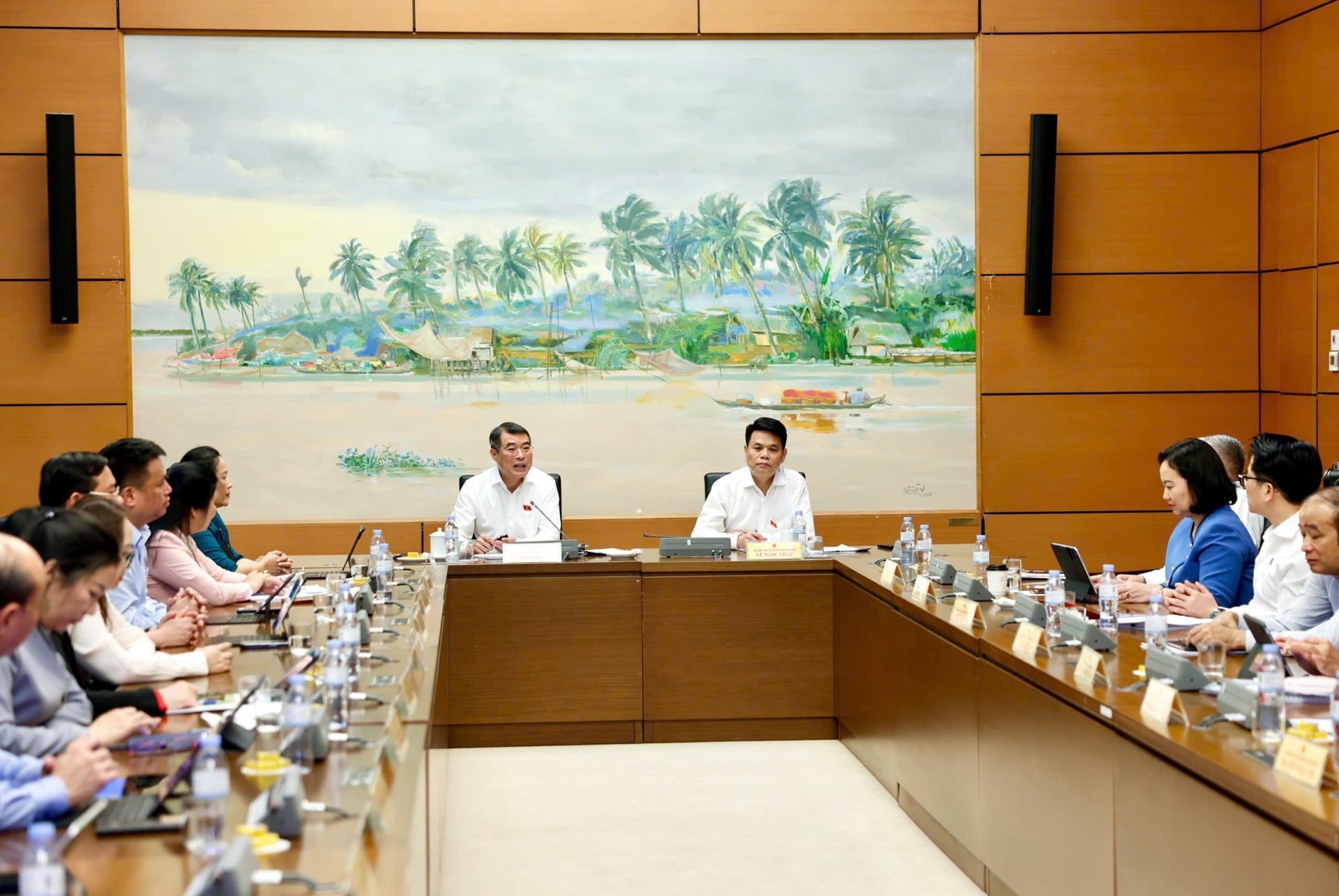
Prime Minister Le Minh Hung spoke at the Group 11 discussion session (comprising the delegations of Hai Phong and Quang Ngai) - Photo: VGP/Nhat Bac
The Prime Minister also clearly stated the requirement to develop very strict criteria, principles, and provisions in the implementing guidance documents in order to avoid loopholes that could lead to tax revenue loss. Along with this is the modernization of the tax administration system, strengthening the application of science and technology in tax collection, and urgently finalizing the implementing decree to ensure that once the National Assembly approves the policy, it can be implemented immediately.
The policy message is one of easing the burden on the people without loosening discipline; supporting development rather than prolonging fragmentation; and resolving immediate difficulties while still upholding the principles of fairness, transparency, and effective public governance. This is also a prerequisite for a tax policy that both provides substantive support for household businesses and avoids eroding fiscal discipline, creating policy inequality, or paving the way for revenue loss.
The proposal to raise the tax threshold for household businesses is not merely a short-term solution. It is a policy adjustment of an orientational nature, demonstrating that the governance mindset is shifting strongly toward accompanying citizens and enterprises, while at the same time tightening state management requirements through law, technology, and enforcement accountability.
(L&D) - The National Assembly has decided to abolish the fixed taxable revenue threshold of 500 million VND/year, delegating to the Government the authority to set an appropriate threshold, with an expected increase to 1 billion VND/year. This is not merely a technical tax adjustment, but also a major reform step aimed at supporting the household economy to develop legitimately, transparently, and sustainably.
(L&D) - After 8 years of implementation, the Project on integrating human rights content into the national education curriculum has created a clear transformation in awareness of the rule of law, contributing to affirming Viet Nam’s consistent policy of respecting, protecting, and ensuring human rights.
(L&D) - May 2026 sees many new policies taking effect, notably: Implementation of regulations on participation in supplementary pension insurance from May 10, 2026; from May 15, 2026, users of e-cigarettes face fines of up to 5 million VND...
(L&D) - On the afternoon of April 7, after being elected by the 16th National Assembly as Prime Minister of the Government for the 2026–2031 term, Comrade Le Minh Hung took the oath of office and delivered his inaugural address before the National Assembly and compatriots and voters nationwide. The Government Portal respectfully introduces the full text of the inaugural address by Prime Minister Le Minh Hung.
(L&D) - Delegate Dang Ngoc Huy, Member of the National Assembly Delegation of Quang Ngai Province, proposed the early development of an independent national petroleum reserve system to overcome strategic delay, ensure energy security, and maintain the foundation of macroeconomic stability.
(L&D) - At the 1st Session of the 16th National Assembly, economic development orientations were placed along the axis of institutional development, high growth, macroeconomic stability, and national self-reliance.
(L&D) - With 100% of the attending deputies in favor, the National Assembly voted to adopt resolutions approving the appointment of 6 Deputy Prime Ministers, Ministers, and members of the Government for the 2026–2031 term.
(L&D) - The Law on the Capital City (Amendment) project is proposed not merely to complete a single law, but to establish a new institutional foundation for Hanoi to achieve breakthrough, modern, disciplined development and to serve as a driving force for the region.