Russian President’s Special Envoy Speaks About NATO’s Collapse in Connection with Greenland
Saturday, Feb/07/2026 - 11:39
(L&D) - Senior Russian federal officials welcomed U.S. President Donald Trump’s imposition of tariffs on NATO allies over Greenland, viewing it as a “collapse” of the military alliance.
Ukraine’s The Kyiv Independent reported on the afternoon of January 18, local time, that several senior officials of the Russian Federation welcomed U.S. President Donald Trump’s threat to impose tariffs on NATO allies in Europe in connection with Greenland. Among them, the Special Envoy of the President of the Russian Federation for foreign investment and economic cooperation, Kirill Dmitriev, stated that the move signaled the “collapse” of the transatlantic alliance.
Earlier, on January 17, President Trump announced on the social media platform Truth Social that: “Starting February 1, 2026, all of the above-mentioned countries (Denmark, Norway, Sweden, France, Germany, the United Kingdom, the Netherlands, and Finland) will be subject to a 10% tariff on any and all goods shipped to the United States. By June 1, 2026, the tariff rate will increase to 25%. These tariffs will be imposed and must be paid until a Deal is reached for the Complete and Total purchase of Greenland.”
According to President Trump, the reason is that “Denmark, Norway, Sweden, France, Germany, the United Kingdom, the Netherlands, and Finland have gone to Greenland with unclear intentions. This is an extremely dangerous situation for the Safety, Security, and Survival of our Planet.”
Regarding this issue, Dmitriev wrote on the social media platform X: “The transatlantic alliance is over,” while also urging European leaders not to “provoke” the U.S. leader.
Related post by Kirill Dmitriev, Special Envoy of the President of the Russian Federation Vladimir Putin for foreign investment and economic cooperation. Screenshot.
For his part, former President of the Russian Federation Dmitry Medvedev, who currently serves as Deputy Chairman of the Security Council of the Russian Federation, also welcomed Trump’s statement, viewing it as evidence that internal rifts within the North Atlantic Treaty Organization (NATO) are deepening.
“The United States is preparing to attack Greenland, choosing this very island instead of something called transatlantic solidarity,” Medvedev said, adding that European countries would be “punished with tariffs” for relying on U.S. protection.
Earlier, Medvedev had urged Trump to swiftly annex Greenland.
Greenland, home to around 56,000 people, already hosts a U.S. military base and has become increasingly strategically important amid rising competition in the Arctic.
According to Ukrainian media outlets UNIAN and New Voice of Ukraine on January 19, Trump first proposed purchasing Greenland during his 2017–2021 term, reportedly offering USD 600 million per year in exchange for permanent U.S. access to the island.
The Trump administration revived the idea in 2025, with discussions over annexation intensifying in January 2026 following the U.S. campaign against Venezuela.
On January 4, Danish Prime Minister Mette Frederiksen called on the Trump administration to “stop threatening” to seize Greenland, stating that the United States has no right to annex any part of Denmark’s territory.
On January 13, Republican Congressman Randy Fine introduced a bill in the U.S. Congress calling for the annexation of Greenland and its recognition as a U.S. state. The bill would allow Trump to negotiate with Denmark and subsequently amend federal law to make Greenland the 51st state of the United States.
In response to the Trump administration’s rhetoric, Greenland called for support from the United Kingdom and proposed dialogue instead of the use of force.
On January 16, reports indicated that the United States plans to hold talks with the Danish government and the Greenlandic authorities approximately every two to three weeks. A working group has been established to continue technical discussions. White House Press Secretary Karoline Leavitt described the first meeting, held in Washington, D.C. on January 14, as “good” and “effective.”
The Kyiv Independent further reported that several European Union (EU) member states have publicly expressed support for Denmark since Trump renewed his threats to annex Greenland, reflecting growing concern in Europe over the potential consequences for NATO cohesion.
Trump has asserted that NATO would become “stronger and more effective” if Greenland were under U.S. control—an argument rejected by European leaders.
Cyprus, the country currently holding the rotating presidency of the EU, announced that EU ambassadors would convene an emergency meeting to assess the situation and discuss possible responses.
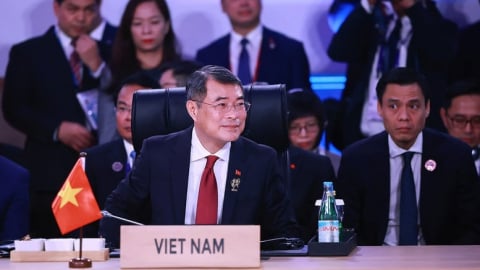
(L&D) - On 8 May, at the Mactan Expo Center in Cebu, the Philippines, Prime Minister Le Minh Hung and a high-level Vietnamese delegation attended the opening ceremony and plenary session of the 48th ASEAN Summit.
(L&D) – After years of focusing on export controls over chips and semiconductor equipment used for Artificial Intelligence (AI), the United States has, for the first time, ordered an AI company to stop providing advanced AI models to foreign nationals on national security grounds. This move has not only sparked debate over the scope of U.S. technology controls but has also raised new questions regarding technological sovereignty, access to AI, and the future of the global AI market.
(PLPT) - After a nearly two-year investigation, the European Union (EU) has imposed a €200 million fine on e-commerce platform Temu for failing to adequately assess and manage risks related to the sale of illegal products on its platform. The case is the latest example of the EU's efforts to strengthen the accountability of digital platforms under the Digital Services Act (DSA).
(L&D) - The European Union has officially adopted new regulations aimed at strengthening water resource protection by adding a number of pollutants to the list of substances subject to stricter monitoring and control, including PFAS - a group of synthetic chemicals that are difficult to decompose and are also known as “forever chemicals” - as well as microplastics and pharmaceuticals.
(L&D) - The ruling invalidating multiple tariffs imposed by President Donald Trump is giving rise to a new form of dispute in the United States: consumers are suing businesses for failing to refund costs allegedly incurred as a result of those tariffs.
(L&D) - The European Union (EU) is considering the possibility of using the “Blocking Statute” to counter U.S. sanctions against the International Criminal Court (ICC), in a context where internal consensus within the bloc has yet to be reached and diplomatic solutions continue to be prioritized.
(L&D) - More than 70 families in Texas are suing SpaceX, blaming Starship rocket launches for having caused vibrations, loud explosions and property damages near the launch site. The lawsuit raises questions about corporate responsibility in the development of commercial space activities in residential areas.
(L&D) - The rapid development of social media platforms is posing multiple consequences for users, especially children, ranging from harmful content to risks of privacy violations. In response to this situation, many countries have begun to tighten regulation over these platforms, establishing clearer requirements regarding responsibility for content control and user protection.