Improving the Law on E-Commerce to ensure fair competition in the digital market
Ninh Gia
Tuesday, Dec/02/2025 - 06:48
(L&D) - At the 10th Session of the 15th National Assembly, the draft Law on E-Commerce was discussed extensively at the plenary session and in group discussions, focusing on platform responsibilities, users’ rights to choose services, and inter-sectoral coordination mechanisms, with a view to improving the legal framework on commercial competition in the context of international integration and digital transformation.
In recent years, e-commerce has grown by 20–25% annually, accounting for around 10% of total retail sales of goods and becoming an important driver of the digital economy. However, this activity has long been regulated mainly by decrees, revealing numerous gaps amid the rapid rise of social media selling, livestreaming, and cross-border platforms, which exert significant pressure on the competitive environment.
Minister of Industry and Trade Nguyen Hong Dien presenting the submission report on the draft Law on E-Commerce.
Presenting the submission report at the plenary session, Minister of Industry and Trade Nguyen Hong Dien emphasized that the promulgation of the Law on E-Commerce is “highly necessary and urgent” in order to internalize international commitments, establish a framework for the healthy development of the digital economy, and “protect the rights and interests of Vietnamese consumers and businesses amid increasingly intense competition in the digital environment”. The draft comprises 7 chapters and 48 articles, clearly classifying types of platforms and defining the responsibilities of owners of e-commerce marketplaces, social networks engaged in e-commerce activities, multi-service platforms, e-commerce support services, and activities involving foreign elements.
Many deputies appreciated that the draft expands its scope of regulation to include social media selling, livestreaming, and cross-border marketplaces; introduces rules on seller identification; and requires foreign platforms to establish or authorize a legal entity in Viet Nam. According to opinions expressed at the plenary session, these provisions not only support tax administration and the fight against counterfeit goods but also gradually “rebalance the playing field” between domestic enterprises and multinational platforms, limiting the abuse of dominant positions and the imposition of unfavorable conditions on partners and small-scale sellers.
A topic that generated lively debate was the competitive mechanism in e-commerce support services such as payment and logistics. If the law only allows consumers to choose from a list of providers announced by the platform, or if the platform connects with only a limited number of partners, the actual freedom of choice becomes restricted, creating advantages for in-house services associated with the platform and posing risks of distorting competition.
During group discussions, Deputy La Thanh Tan (Hai Phong Delegation of the National Assembly) requested further clarification of platform owners’ responsibilities, emphasizing that platforms must not impose “unequal conditions on organizations providing e-commerce support services, and must not restrict users’ choices of payment or delivery services.” According to the deputy, the law should require platforms to disclose information on service providers so that buyers have the right to choose, including when they use services not directly connected to the platform or when sellers arrange their own delivery.
From the business community, opinions also warned of risks that platforms might use their influence to impose or “mandate recommendations” of certain service providers, making it difficult for sellers and buyers to access more cost-effective options. Representatives of logistics enterprises proposed clearly stipulating the principle that e-commerce platforms “must not obstruct or cause difficulties” for users’ service choices, considering this an important test of the competitive environment in the digital market.
Amending the Law on E-Commerce is an urgent issue to ensure adaptability in the digital era.
From an institutional perspective, during group discussions of the Ha Noi Delegation of the National Assembly, Deputy Nguyen Thi Lan stated that e-commerce is a cross-sectoral field closely linked to taxation, customs, finance, cybersecurity, and personal data protection. Therefore, the law needs to establish clear coordination mechanisms among agencies to avoid each sector “managing a separate part,” which may result in overlaps and create loopholes for tax evasion, commercial fraud, and unfair competition in cross-border transactions.
Opinions also emphasized that the improvement of the Law on E-Commerce must ensure consistency with the Law on Competition, the Law on Protection of Consumers’ Rights, and regulations on personal data and intellectual property in the context of Viet Nam’s participation in numerous new-generation free trade agreements. This demonstrates that the objective is not only to “tighten management” over enterprises in the digital environment, but to establish a coherent and transparent competitive framework that provides a regulatory corridor for Vietnamese enterprises to develop sustainably.
If revisions continue in the direction of specifying platform responsibilities, substantively protecting consumers’ freedom of choice, strengthening inter-agency coordination, and ensuring close alignment with the legal framework on competition, the Law on E-Commerce will become an important legal lever contributing to improving regulations on commercial competition in the new integration context.
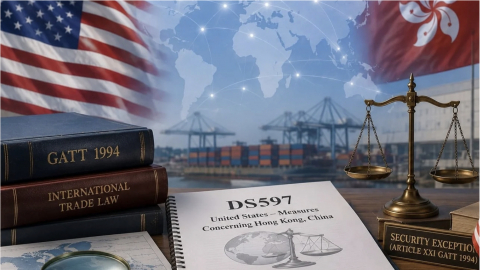
(L&D) - Based on an analysis of the Panel Report in DS597 and a comparison with previous jurisprudence, this article clarifies the Panel's approach to determining the concept of an “emergency in international relations”, a key condition for invoking the security exception.
(L&D) - Through analysis and comparison, the article proposes several orientations for improving regulations on the licensing of small modular reactors (SMRs) in Viet Nam based on the approach adopted under United States law, while ensuring compatibility with the country's institutional conditions, regulatory capacity, and energy development context.
(L&D) - This article approaches the issue by analyzing international experiences regarding the legal status of cryopreserved embryos in relation to the rights and obligations of spouses upon the termination of marriage under the laws of several countries around the world, thereby clarifying issues that may arise in practice concerning cryopreserved embryos in order to suggest directions for improving Vietnamese law, with a view to balancing bioethics and reproductive autonomy in modern family
(L&D) - This article examines the theoretical foundations of LIS and assesses the current operation and disclosure of this system in Vietnam. Based on a comparative analytical framework, the article refers to the legal and institutional models governing LIS in several countries implementing two-tier government, including Japan, Germany, South Korea, and France, across key areas such as land valuation, land allocation, and the implementation of land information disclosure regulations. On that bas
(L&D) - This article analyzes the mineral exploitation rights auction mechanism in the geological and mineral laws of Vietnam and Canada from the following perspectives: geological data transparency, valuation methods, exploration risk allocation, and the role of the community.
(L&D) - The Population Law 2025 has laid an important legal foundation, clearly reflecting Viet Nam’s new perspective and awareness regarding population policy, creating a better legal basis for ensuring women’s reproductive autonomy in order to meet the requirements of sustainable population development in the current period.
(L&D) - The article aims to propose an approach for Vietnam in the context of being a developing country participating in global supply chains, emphasizing policy orientation and a roadmap for developing a legal framework on corporate sustainability due diligence.
(L&D) - The article focuses on analyzing the current situation of the application of Basel III in Vietnam from a legal perspective, clarifying the gaps and challenges in the existing legal system, thereby proposing a number of solutions to improve the law on banking operational safety, contributing to enhancing the effectiveness of state management and ensuring the safe and sustainable development of the Vietnamese banking system.